Some cardiac symptoms appear only during physical activity. A person may feel comfortable while sitting yet experience chest pressure, unusual breathlessness, or reduced exercise capacity while walking quickly or climbing stairs. A TMT (Stress Test) in Kothrud may be considered in selected patients to observe how the heart responds to controlled physical exertion.
TMT stands for treadmill test. It is commonly referred to as an exercise stress test.
How Does a TMT Work?
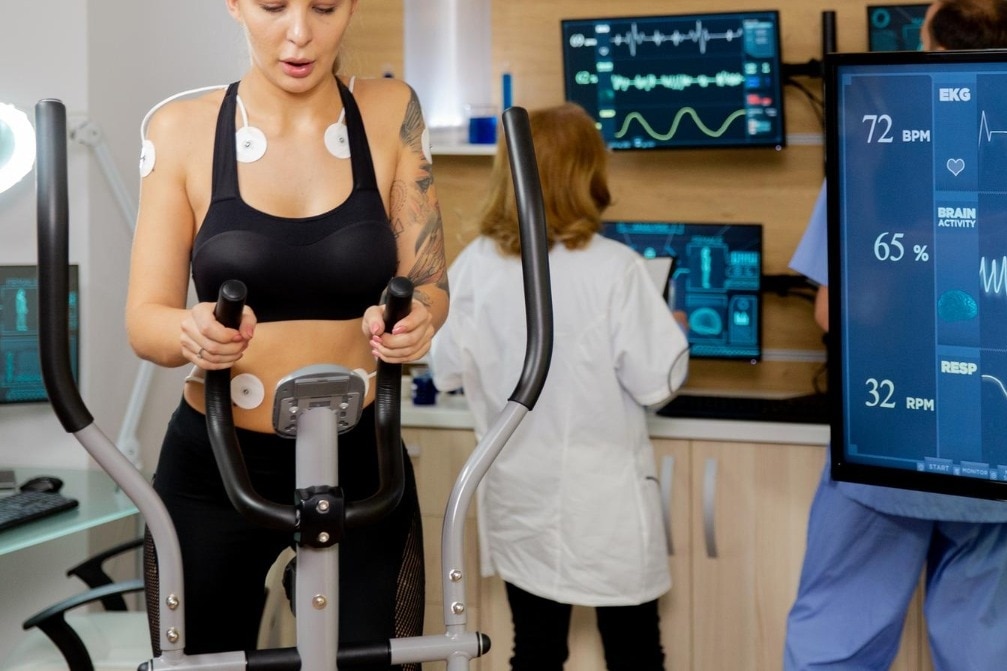
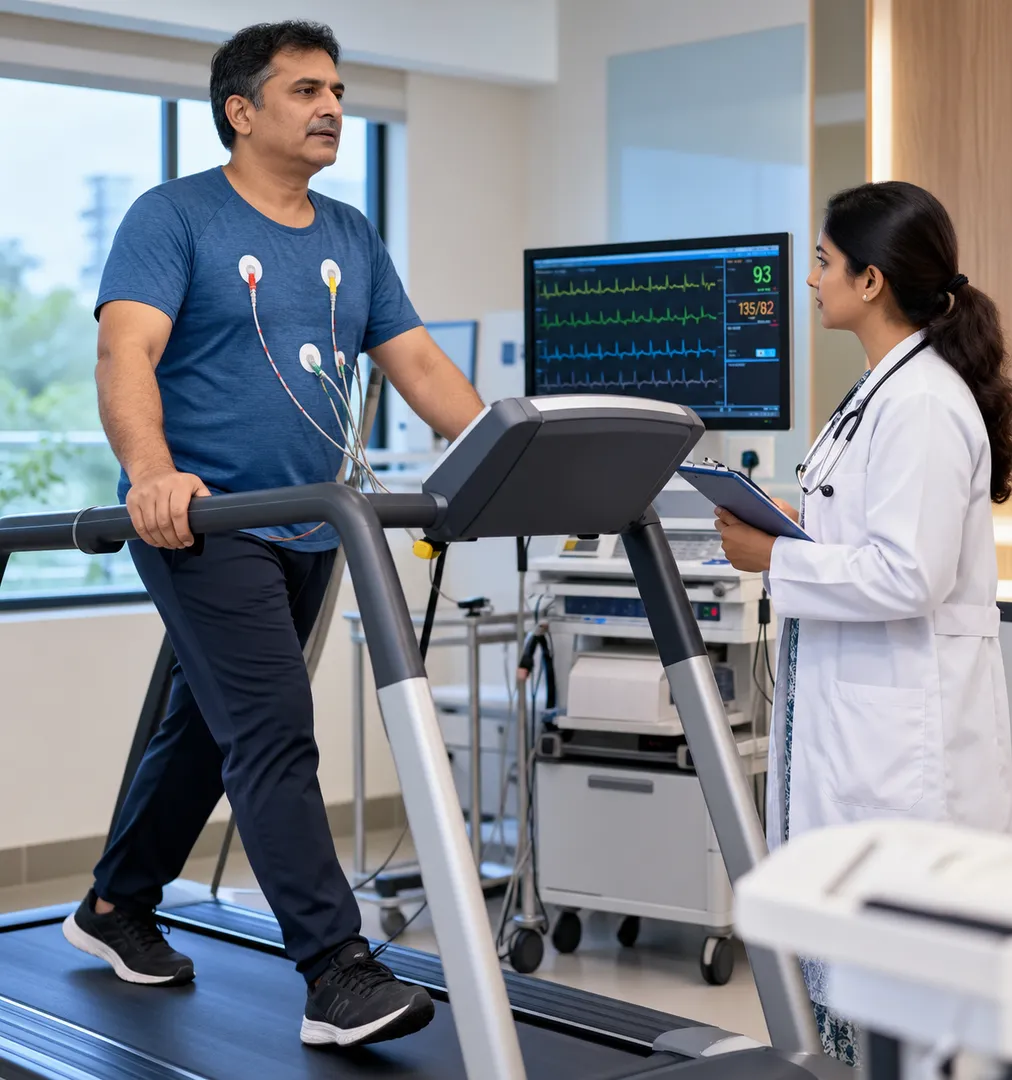
During the test, the patient walks on a treadmill while cardiac electrical activity is monitored through an ECG.
Exercise intensity gradually increases according to the testing protocol.
The clinical team observes factors such as
- ECG response
- Heart rate
- Blood pressure
- Exercise capacity
- Development of symptoms
The test is performed under supervised conditions.
Why Might a Cardiologist Recommend It?
A stress test can be useful when a clinician needs information about how the heart behaves during exertion.
Possible reasons include
- Evaluation of selected chest symptoms
- Assessment of exertional symptoms
- Investigation of suspected coronary disease in suitable patients
- Functional assessment in certain cardiac situations
- Exercise-capacity evaluation
- Follow-up in selected cases
It is not automatically appropriate for every person with chest discomfort.
Who May Need a Different Test?
The usefulness of a treadmill test depends on whether the patient can exercise adequately plus whether the resting ECG can be interpreted appropriately.
Some people may have physical limitations that make treadmill exercise unsuitable. Certain baseline ECG patterns or clinical conditions can also affect test selection.
In these situations, the cardiologist may consider another form of cardiac evaluation.
This is why patients should avoid booking a cardiac test purely on the basis of symptoms without first understanding whether it is the right investigation.
What Should Patients Wear?
Comfortable clothing plus footwear suitable for treadmill walking are generally practical.
Patients should follow specific instructions regarding meals, medicines, plus preparation provided by the testing centre or treating cardiologist.
Certain medicines can influence heart-rate response. However, they should never be stopped without explicit medical instructions.
What Does a Positive Result Mean?
Patients sometimes interpret a positive stress test as definitive proof of a coronary blockage.
The reality is more nuanced.
A stress-test result needs to be considered together with
- Symptoms
- Exercise capacity
- ECG pattern
- Cardiovascular risk factors
- Age
- Previous cardiac history
- Other test results
Further evaluation may be recommended when findings suggest possible reduced blood flow to the heart.
Similarly, a negative test does not answer every possible cardiac question.
What Symptoms Should Be Reported During Testing?
Patients should tell the supervising team if they experience chest discomfort, unusual breathlessness, dizziness, weakness, or any other significant symptom.
Trying to push through symptoms does not make the test more successful.
The purpose is to observe the cardiovascular response safely under controlled conditions.
Stress-Test Evaluation in Kothrud
At Cure Clinic in Kothrud, Dr. Anuja Mulay can assess symptoms plus cardiovascular risk factors to determine whether exercise stress testing is appropriate as part of a broader cardiac evaluation.
Patients with previous ECGs, echo reports, prescriptions, plus details of previous cardiac treatment should bring those records for review.
A TMT (Stress Test) in Kothrud can provide useful information about exercise response in appropriately selected patients. Its value depends on choosing the test for the right clinical question plus interpreting the findings within the patient's broader cardiovascular profile. A cardiology assessment before testing can help determine whether TMT is suitable or whether another investigation would provide more useful information.
Keywords