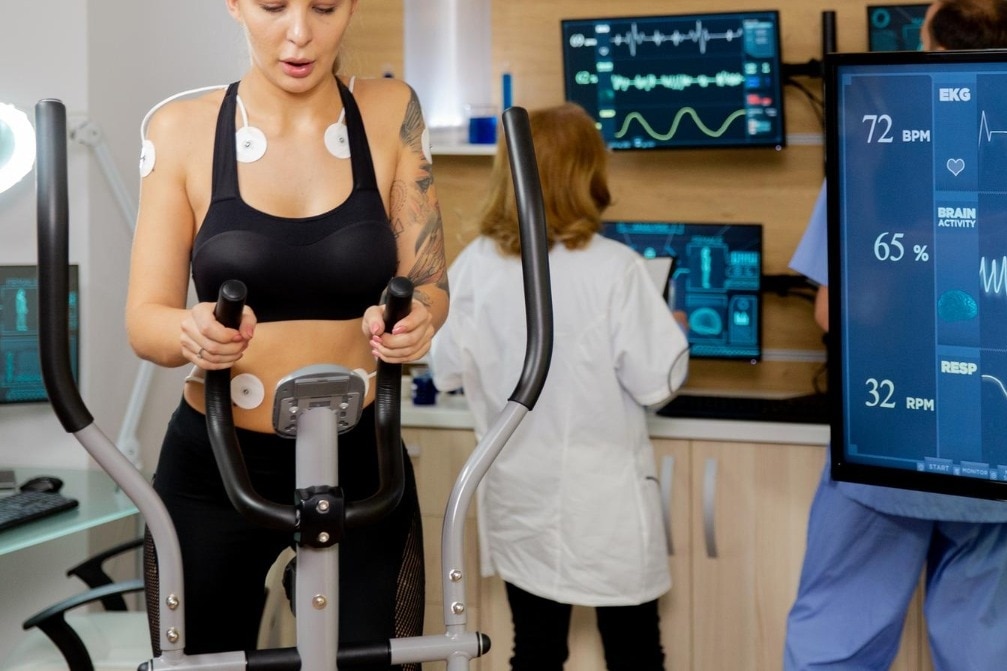
Some heart-related problems become noticeable only when the body works harder. Walking quickly, climbing stairs or exercising increases the heart's demand for oxygen, which is why symptoms such as chest discomfort or breathlessness may appear during activity even when a person feels comfortable at rest.
A TMT Stress Test helps evaluate how the heart responds to controlled physical exertion.
At Cure Clinic, Dr. Anuja Mulay can assess whether stress testing is appropriate based on symptoms, cardiovascular risk factors and previous investigations.
How the TMT Stress Test Works
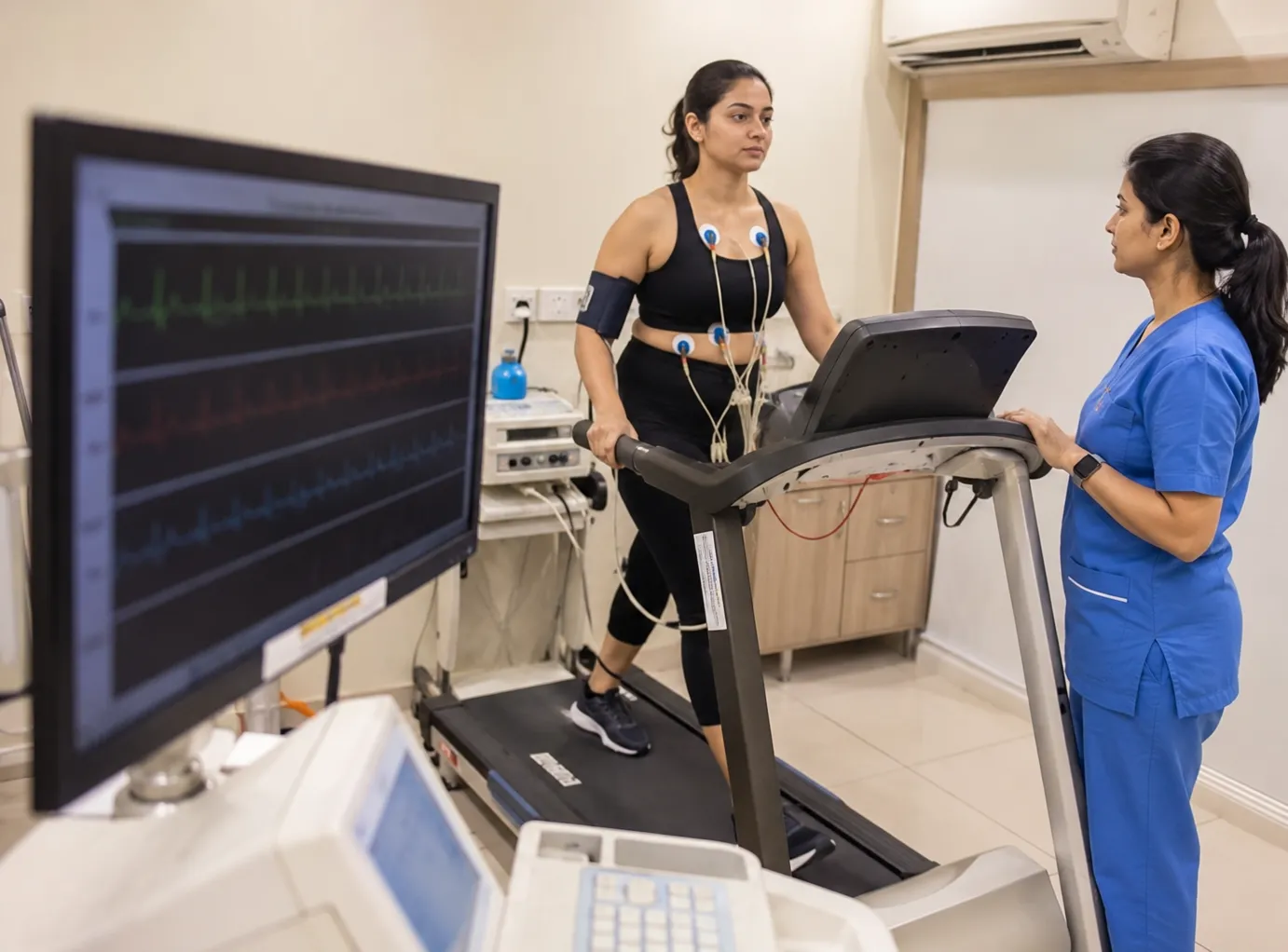
TMT stands for treadmill test. During the test, the patient walks on a treadmill while the workload is gradually increased according to a defined protocol.
During exercise, the medical team monitors factors such as:
- Heart rate
- Heart rhythm
- ECG changes
- Blood pressure
- Exercise tolerance
- Symptoms experienced during exertion
The aim is not simply to determine how long someone can walk. The test provides information about how the cardiovascular system behaves when demand increases.
Why a Doctor May Recommend Stress Testing
A TMT may be considered when a doctor needs additional information about exercise-related symptoms or possible coronary artery disease.
For example, someone may describe chest heaviness that develops while walking uphill but disappears with rest. Another patient may experience unexplained breathlessness during activities that were previously comfortable.
Stress testing can sometimes help reproduce symptoms in a monitored environment while recording the heart's response.
It may also be used in selected patients to assess functional capacity or provide information after certain cardiac treatments.
TMT Is Not the Same as a Routine ECG
A resting ECG records the electrical activity of the heart while the patient is at rest.
A TMT records ECG information while the heart is being challenged by increasing physical activity.
This distinction is important because certain abnormalities may not be evident when the body is resting.
However, the tests are complementary rather than interchangeable. Depending on the clinical situation, a cardiologist may use information from symptoms, examination, resting ECG, echocardiography and stress testing together.
Is Everyone Suitable for a TMT
No.
Exercise testing may not be appropriate for every patient. Certain existing heart conditions, significant symptoms, mobility limitations, abnormal baseline findings or other medical considerations may affect whether a treadmill-based test is suitable.
Some patients may need a different type of cardiac investigation instead.
This is one reason stress tests should be selected based on clinical assessment rather than booked simply because someone wants a general heart check.
Preparing for the Test
Patients should follow the specific instructions provided by their healthcare team. Comfortable clothing and footwear are generally useful because walking or jogging may be required.
Patients should also provide accurate information about current medications and existing health conditions. Medicines should not be stopped unless specifically instructed by the treating doctor.
During the test, patients should report symptoms such as chest discomfort, dizziness, unusual breathlessness or significant fatigue.
Making Sense of the Result
A TMT result should not be interpreted in isolation.
The cardiologist considers the ECG response, symptoms, exercise capacity, blood pressure response and the patient's overall cardiovascular profile. Depending on the findings, no additional testing may be required, or further evaluation may be considered.
For patients seeking a TMT Stress Test in Kothrud, assessment by Dr. Anuja Mulay at Cure Clinic can help determine whether exercise testing is relevant and how the findings should be interpreted alongside the broader clinical picture.
Keywords