An ECG Test is one of the most familiar cardiac investigations, yet many patients are uncertain about what it can actually detect.
An electrocardiogram records the electrical signals associated with each heartbeat. It is quick and non-invasive, and it can provide useful information about heart rate, rhythm and certain abnormalities.
At Cure Clinic, Dr. Anuja Mulay may use ECG findings together with symptoms, examination and other investigations when assessing patients with possible cardiovascular concerns.
What Happens During an ECG
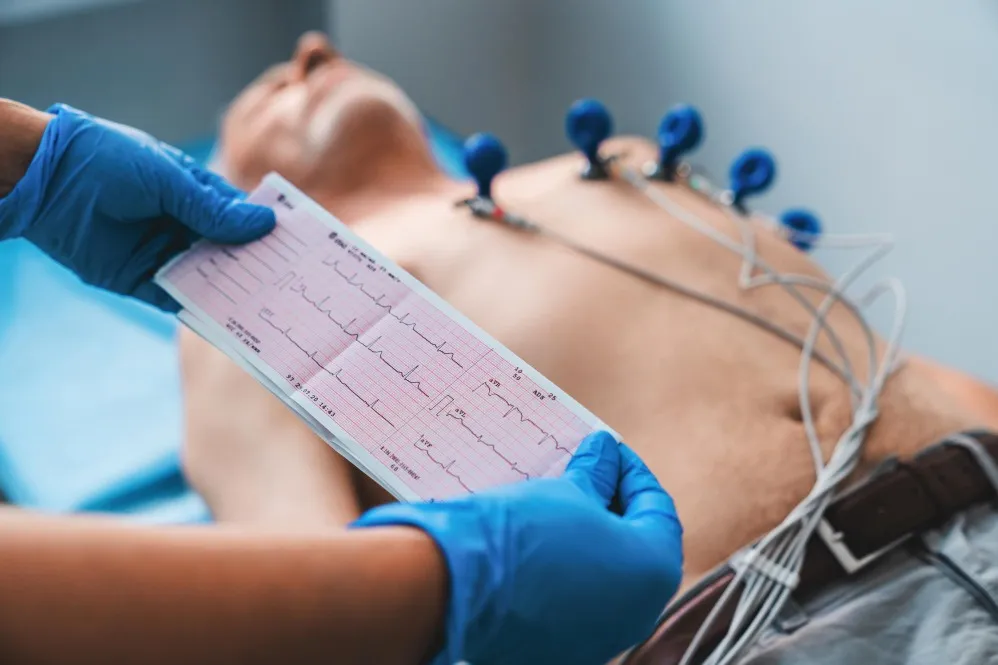
Small electrodes are placed on specific areas of the chest and limbs. These electrodes detect electrical activity and produce a tracing.
The test itself does not send electricity into the body.
The resulting ECG provides information about how electrical impulses travel through the heart.
A cardiologist may evaluate:
- Heart rate
- Heart rhythm
- Electrical conduction
- Certain rhythm disturbances
- Changes associated with some heart conditions
An ECG may also provide useful information when evaluating chest pain, palpitations, dizziness and other symptoms.
When an ECG May Be Recommended
There are many reasons a doctor may request an ECG.
A patient may report a racing heartbeat, skipped beats or episodes of dizziness. Another may have chest discomfort or shortness of breath. An ECG can be part of the initial assessment in these situations.
It is also commonly used in patients with known heart conditions and may form part of pre-procedure or ongoing cardiac evaluation.
A Normal ECG Does Not Answer Every Cardiac Question
This is an important point for patients.
An ECG captures the heart's electrical activity during the period when the recording is made. If an intermittent rhythm problem is not happening at that moment, it may not appear on a short resting ECG.
Similarly, an ECG and an echocardiogram examine different aspects of the heart.
The ECG focuses primarily on electrical activity. An echo uses ultrasound to examine structure and function. A TMT evaluates cardiovascular response during exercise.
Depending on the symptoms, a cardiologist may need one investigation or a combination of tests.
ECG Testing for Palpitations
Palpitations can feel like pounding, racing, fluttering or skipped beats.
Some episodes are brief and occasional, while others are recurrent. An ECG can help identify certain rhythm abnormalities when they are present during the recording.
When symptoms are intermittent, additional monitoring may sometimes be considered based on the clinical situation.
Patients can help by noting when palpitations occur, how long they last and whether they are accompanied by dizziness, breathlessness, chest discomfort or fainting.
Why Interpretation Matters
Automated ECG machines can generate preliminary observations, but an ECG should be interpreted in the context of the individual patient.
Age, symptoms, medications, previous cardiac history and other test findings can all affect the significance of an ECG pattern.
For this reason, patients should avoid drawing conclusions from individual terms printed on an automated report without clinical interpretation.
ECG Assessment
For patients in Kothrud and nearby Pune neighbourhoods, an ECG can be an accessible first-line investigation when clinically indicated.
At Cure Clinic, Dr. Anuja Mulay can evaluate symptoms and determine how an ECG Test fits into the broader cardiac assessment.
The key is understanding what the test can reveal, what it cannot establish on its own and whether further evaluation is necessary.
Keywords