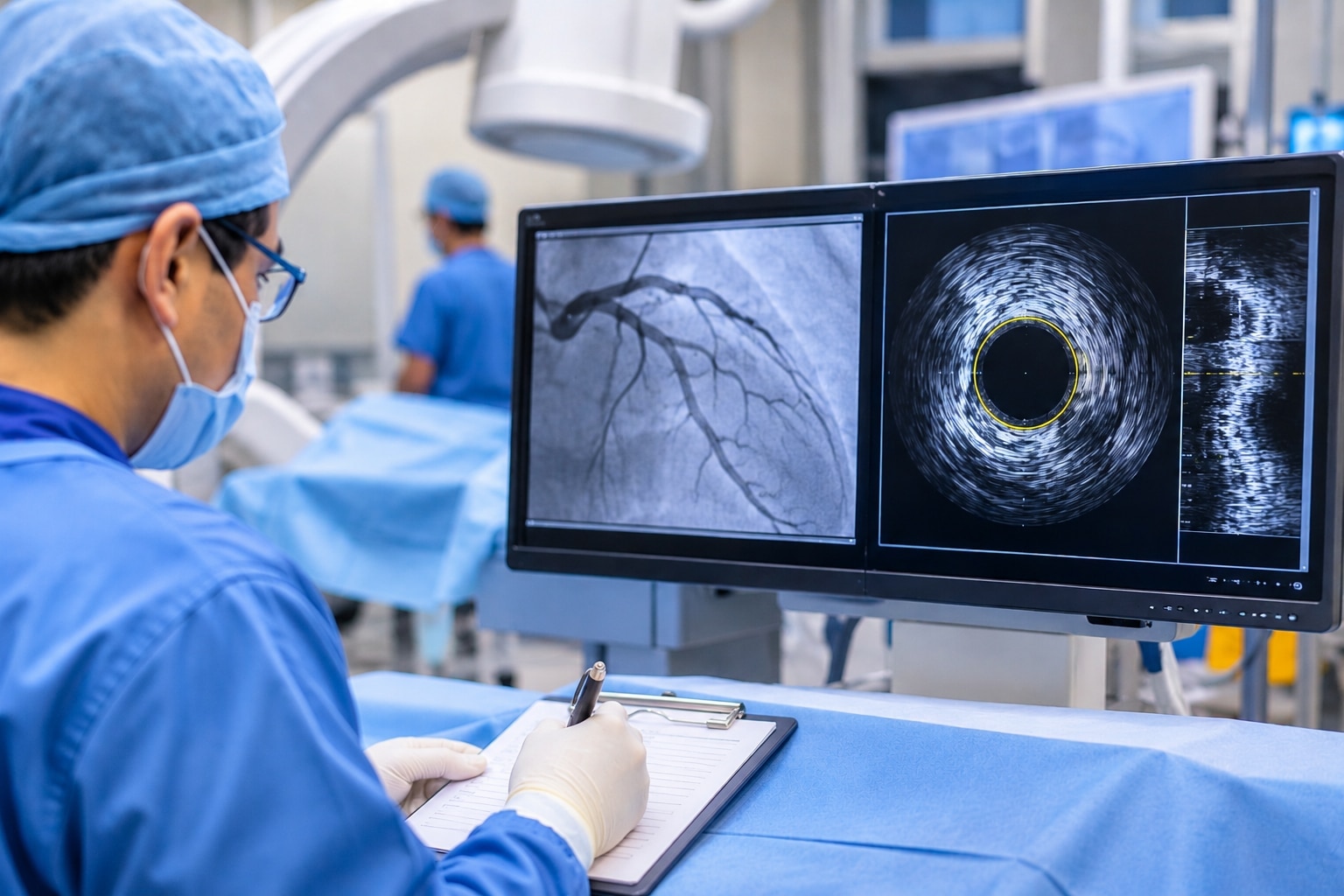
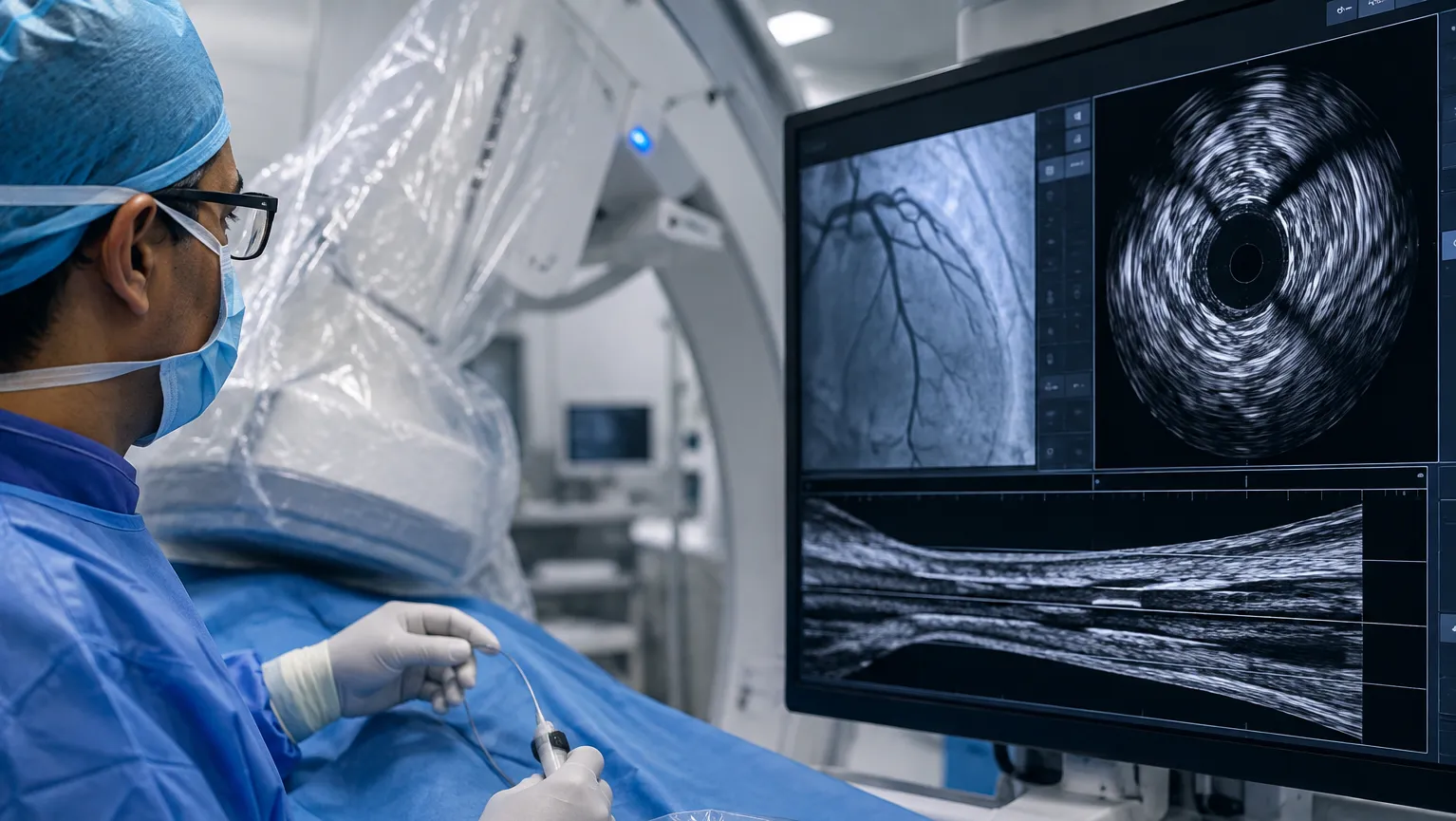
Coronary artery disease can be more complex than what appears on a standard angiogram. A narrowing may look significant on an image, yet cardiologists sometimes need more information about the artery wall, plaque distribution, vessel size, or stent placement before making treatment decisions. Intravascular Ultrasound (IVUS) provides this additional perspective from inside the blood vessel.
For patients in Kothrud undergoing evaluation for coronary artery disease, understanding why IVUS may be recommended can make advanced cardiac procedures easier to follow.
What Is Intravascular Ultrasound?
IVUS is an imaging technique used during certain catheter-based cardiac procedures. A very small ultrasound probe is passed through a catheter into a coronary artery. It produces cross-sectional images from within the vessel.
Unlike imaging that primarily shows the outline of blood flowing through an artery, IVUS helps the cardiologist examine structures within the vessel itself.
It can provide useful information about
- The actual size of the artery
- The degree of narrowing
- Plaque inside the vessel
- Characteristics of the artery wall
- Stent expansion
- Stent positioning
- Areas that may require closer assessment
The test is not necessary for every cardiac patient. Its use depends on the clinical situation.
Why Can an Angiogram Sometimes Need Additional Imaging?
Angiography remains an important technique for identifying coronary artery narrowing. However, an angiogram produces a two-dimensional representation of the vessel lumen.
Certain lesions can be difficult to evaluate fully through angiography alone. This may occur when narrowing involves a complex area, when vessel dimensions need precise assessment, or when a previously placed stent requires evaluation.
IVUS can provide additional structural information that helps the treating cardiologist understand what is happening inside the artery.
How IVUS Helps During Angioplasty
One important application of IVUS is procedural guidance during selected angioplasty cases.
Before placing a stent, IVUS may help determine vessel dimensions. This information can support decisions regarding suitable stent diameter or length.
After placement, imaging can help assess whether the stent has expanded adequately against the vessel wall. It may also identify areas requiring further optimization.
Precise stent deployment is particularly important because the objective is not simply to place a stent but to restore blood flow effectively while achieving appropriate positioning.
Is IVUS Painful?
IVUS is usually performed as part of a catheter-based cardiac procedure rather than as a routine standalone outpatient scan.
The ultrasound catheter travels inside the blood vessel, so patients generally do not feel the probe moving through the coronary artery. The overall experience depends more on the catheterization procedure being performed.
The cardiology team explains preparation, anesthesia, procedural steps, recovery, plus relevant precautions according to the patient's condition.
Who May Need IVUS?
A cardiologist may consider IVUS in selected circumstances such as
- Complex coronary artery narrowing
- Uncertain lesion severity
- Evaluation of certain previously placed stents
- Assessment of vessel dimensions
- Complex angioplasty planning
- Optimization of stent deployment
Its use should be based on individual clinical findings rather than requested simply because it is an advanced technology.
Why Individual Cardiac Assessment Matters
Two people with apparently similar artery narrowing may not require identical treatment. Symptoms, age, medical history, artery anatomy, heart function, previous procedures, plus associated health conditions all influence management.
At Cure Clinic in Kothrud, Dr. Anuja Mulay evaluates cardiac concerns through clinical assessment plus appropriate diagnostic information before discussing further management.
Patients should also provide details about previous angiograms, angioplasty procedures, medications, allergies, kidney-related concerns, plus existing medical conditions before invasive cardiac investigations.
What Patients Should Ask Before the Procedure
Useful questions include
- Why is IVUS being considered in my case?
- What additional information could it provide?
- Will it be performed during angiography?
- Could the findings affect angioplasty planning?
- What preparation is required?
- What should I expect during recovery?
Understanding the purpose of a procedure helps patients participate more meaningfully in cardiac care decisions.
Intravascular Ultrasound (IVUS) is an advanced imaging technique that can provide detailed information from within coronary arteries. It is particularly useful when a closer assessment of vessel structure, plaque, lesion characteristics, or stent deployment is clinically valuable. The decision to use IVUS should always be based on a cardiologist's assessment of the individual case.
Keywords