
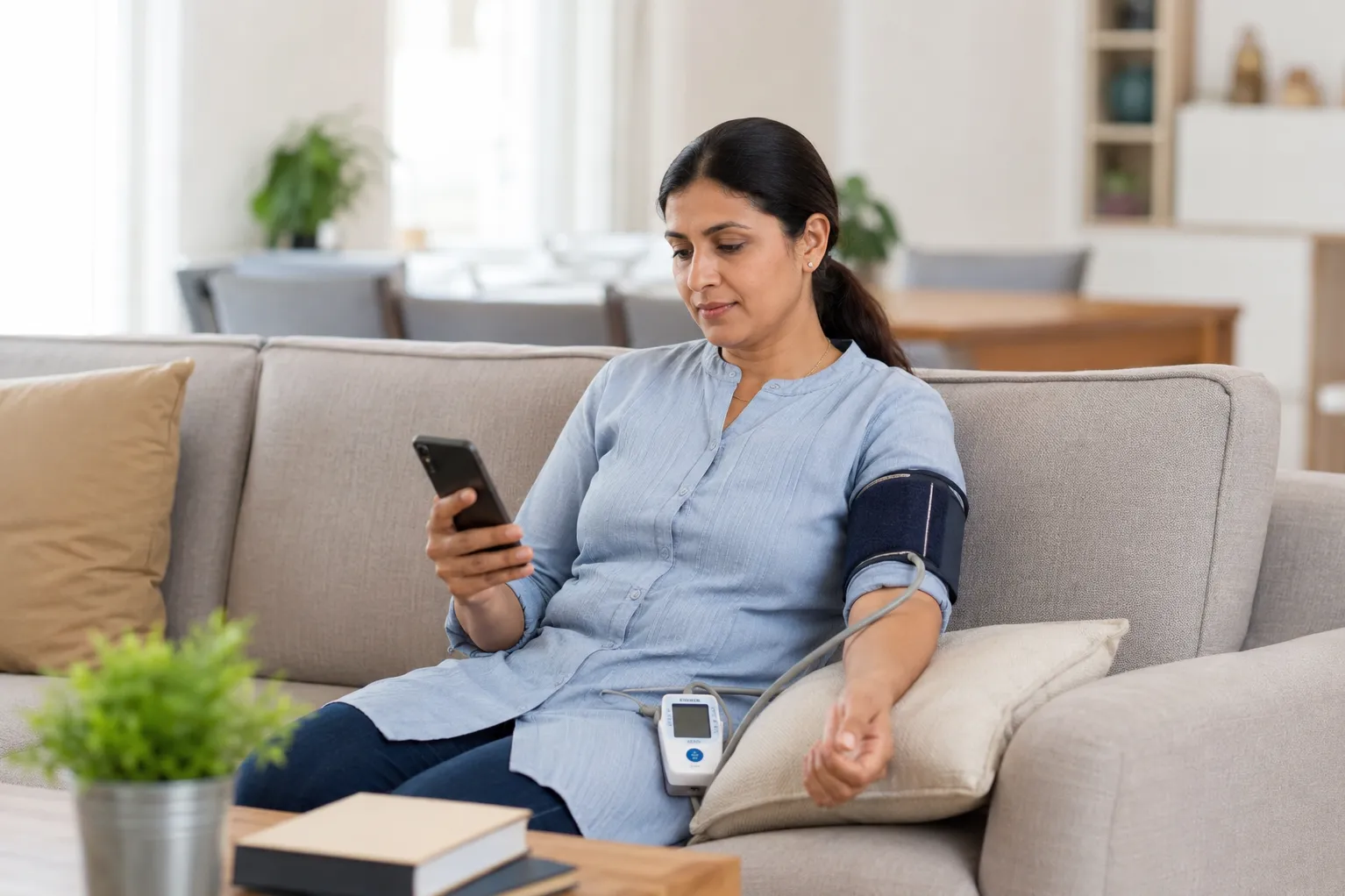
A single blood pressure reading captures what is happening at one particular moment. For some patients, that is not enough to understand their usual blood pressure pattern.
Ambulatory Blood Pressure Monitoring records blood pressure repeatedly while a person continues normal daily activities and during sleep. This can provide a broader picture than an isolated clinic measurement.
At Cure Clinic, Dr. Anuja Mulay may consider ambulatory monitoring when routine readings do not provide enough information for confident assessment.
Why Clinic Readings Can Vary
Blood pressure changes naturally throughout the day.
Physical activity, emotional stress, sleep, caffeine, pain and other factors can influence a reading.
Some people repeatedly have higher measurements in a medical setting than they do during their normal routine. Others may show acceptable readings during appointments while experiencing elevated blood pressure at other times.
This variation is one reason a series of measurements can sometimes be more informative than a single value.
How Ambulatory Monitoring Works
A portable monitor is connected to an inflatable cuff worn on the arm.
The device automatically takes blood pressure measurements at scheduled intervals over a defined monitoring period, often including daytime and night-time readings.
Patients generally continue their usual routine unless given different instructions.
Keeping a simple record of activities, sleep and symptoms can sometimes help the doctor interpret unusual readings.
When ABPM May Be Helpful
Ambulatory monitoring may be considered when:
- Clinic readings vary substantially
- Hypertension is suspected but not clearly established
- There is concern about blood pressure outside clinic hours
- Treatment response needs closer assessment
- Symptoms appear to coincide with blood pressure changes
- Night-time blood pressure patterns need evaluation
The reason for monitoring should be determined by the treating clinician.
What the Report Can Show
Rather than producing one number, ambulatory monitoring generates a pattern.
The cardiologist can examine readings across different periods and consider daytime and sleep measurements in the appropriate clinical context.
This can help avoid basing treatment decisions on an unusual isolated reading.
Patients should also remember that blood pressure management is not simply about reaching one number. Age, cardiovascular risk, diabetes, kidney disease, medications and other health factors can affect treatment decisions.
Getting More Useful Results
During monitoring, follow the instructions given by the clinic.
Unless advised otherwise, try to maintain a reasonably typical day. If the day is completely different from your usual routine, tell the doctor when the report is reviewed.
Do not independently change prescribed blood pressure medication simply to see how the monitor responds.
Blood Pressure Assessment
Persistent hypertension is an important cardiovascular risk factor, making accurate assessment valuable.
For patients in Kothrud and surrounding Pune areas whose clinic readings are inconsistent or require closer evaluation, Dr. Anuja Mulay at Cure Clinic can determine whether Ambulatory Blood Pressure Monitoring may provide useful additional information.
A fuller pattern of readings can help the clinician understand what is happening beyond the few minutes a patient spends in the consultation room.
Keywords